
20 Years of richardlemon.com – A Website Grows Up


I was doing routine Search Console housekeeping last week when I fell down a rabbit hole I didn't expect. The Wayback Machine has 109 captures of richardlemon.com. The first one: May 8, 2007. But the domain itself was registered even earlier – September 5, 2006. That's 7,171 days ago.
I started clicking through the captures. One hour later I was still going.
What I found wasn't just a series of homepage redesigns. It was a documentary – of several cities, two countries, various job titles, and one person trying to figure out who he was and what he was building. Every homepage was a timestamp. Every headline was a confession.
Here's the full story.
2008 -- The SEO Blog Era
The earliest readable capture is from late 2008. A dark WordPress theme, a blogroll packed with SEOmoz and Matt Cutts links, and a tagline that reads: "Web Industry and SEO Talk."
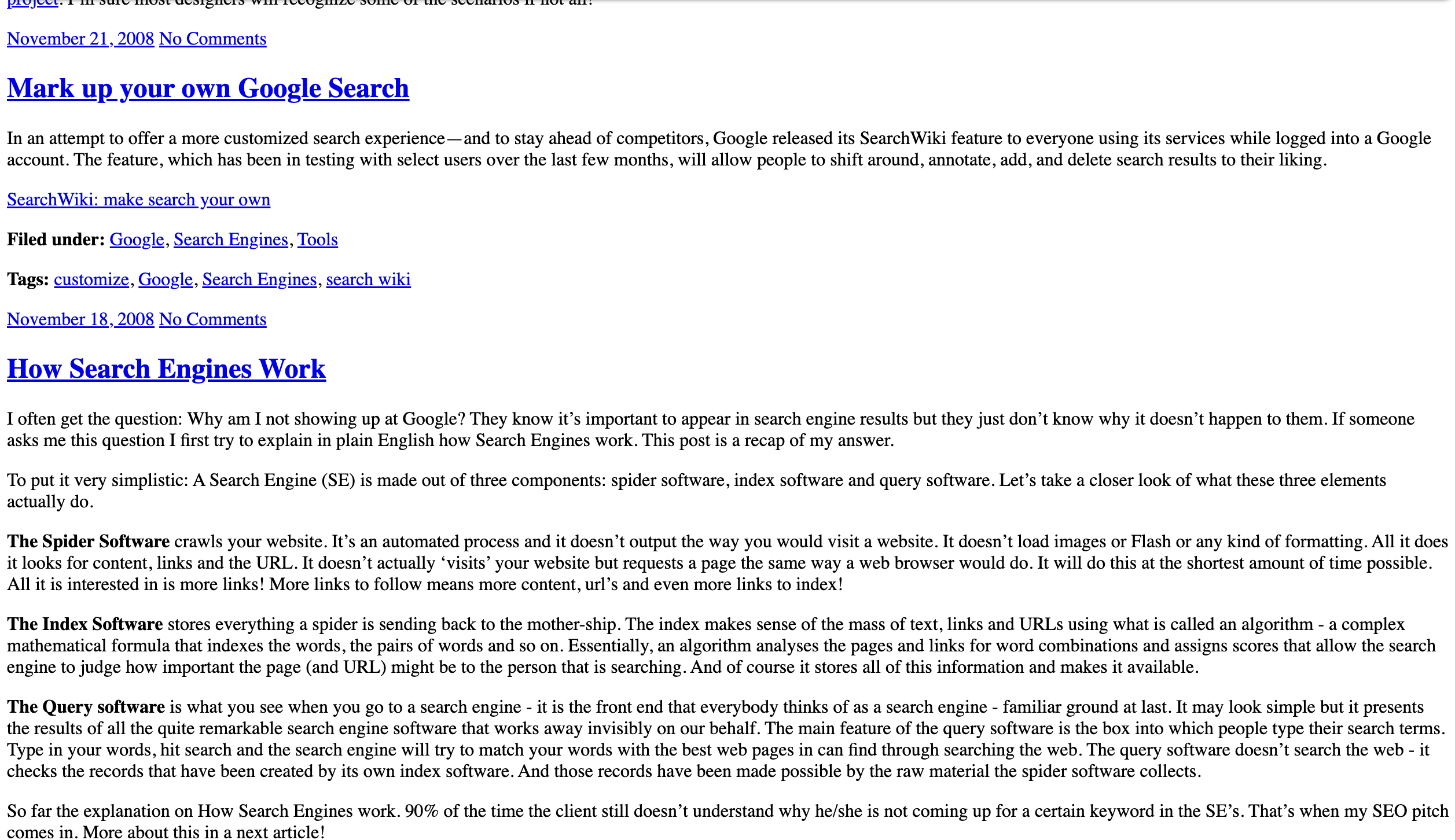
I was living in Santa Rosa, California -- seven years into my Bay Area chapter, which started in 2003. And I was writing. Seriously writing. Posts about how search engines work, about Google's algorithm, about the Semantic Web.
That last one is worth pausing on. In December 2008 I wrote about how the Semantic Web would change everything -- how machines would eventually be able to understand content, not just index it, and suggest connections the human mind could never make. I described it as a key part of the upcoming "Web 3.0."
In 2026, that's called GEO – Generative Engine Optimization. And it's exactly what I'm implementing on this site right now.
I didn't know I was writing about my future. I thought I was writing about trends.
The footer of that 2008 site, by the way, proudly stated: "Design by USA Phone Lookup. In collaboration with Biker Dating Sites." Spam link partnerships were apparently part of the SEO toolkit. We don't talk about that anymore.
What this era taught me: The things you're genuinely curious about in your twenties are usually the things you'll still be building with in your fifties. Pay attention to what you can't stop writing about.
2010 – The Santa Rosa Portfolio
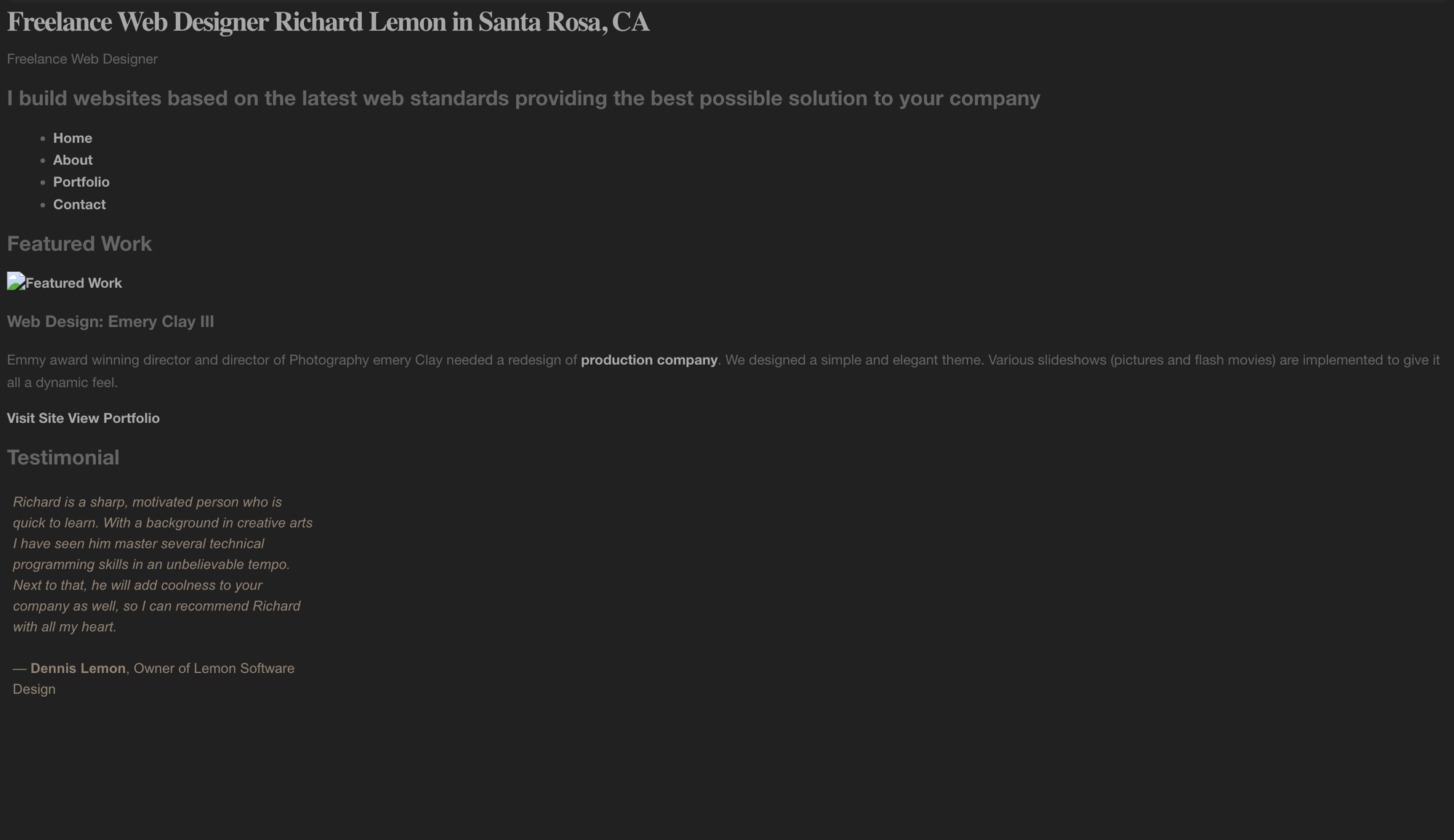
By early 2010 the blog had become a proper freelance portfolio site. Clean layout, testimonials, a full services list, a downloadable CV, and a physical address: 15810 Shawnee Cir., Middletown CA 95461.
A phone number with a 707 area code. A fax number. An actual fax number.
The copy read: "What use is a state of the art website if it can't be found?" I was already obsessed with visibility -- not just building things, but making sure people could actually find them. The services listed included SEO packages, WordPress integration, logo design, and website hosting.
The clients were real Bay Area businesses -- a director of photography, a vacation rental company, a dental practice in Clermont. Small, personal, local. This was freelance web design in its most honest form: one person, a MacBook, and a genuine interest in helping other small businesses get found online.
I left for Europe later that year. The Middletown address disappeared. The 707 number went silent.
What this era taught me: Visibility is not a feature. It's the whole point. A beautiful website nobody finds is a very expensive hobby.
2012 – Rotterdam and "Damn Straight"
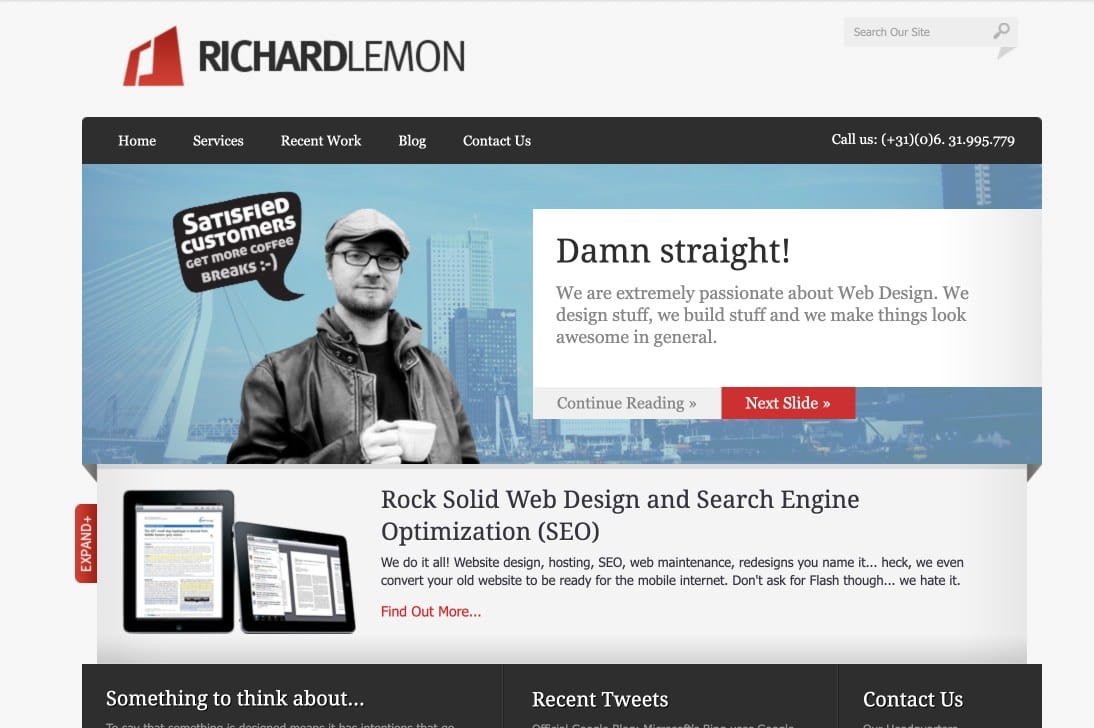
October 2012. I had been in Rotterdam for two years and the energy of that city was all over the homepage.
Full-bleed hero slider. A black-and-white photo, a flat cap, coffee in hand, the Erasmusbrug rising behind the person. A speech bubble: "Satisfied customers get more coffee breaks." The headline: "Damn straight!"
The subline: "We are extremely passionate about Web Design. We design stuff, we build stuff and we make things look awesome in general."
And buried in the services section, a line that still makes me smile: "Don't ask for Flash though... we hate it." Two years earlier Flash had been on my toolstack under "Weapons of Mass Destruction." No explanation. No apology. Just the quiet confidence of someone who had moved on and wasn't going to pretend otherwise.
The phone number was right there in the header. No funnel. No contact form gating. Just: here is my number, call me if you want a website.
This was the most extroverted version of richardlemon.com that has ever existed. Loud, bold, Rotterdam-energy. It was trying to look bigger than one person. Somehow it worked.
What this era taught me: Confidence in your copy is a design decision. The way you describe yourself shapes the clients you attract -- and the ones you repel.
2014 – Three Sentences and a Black Screen
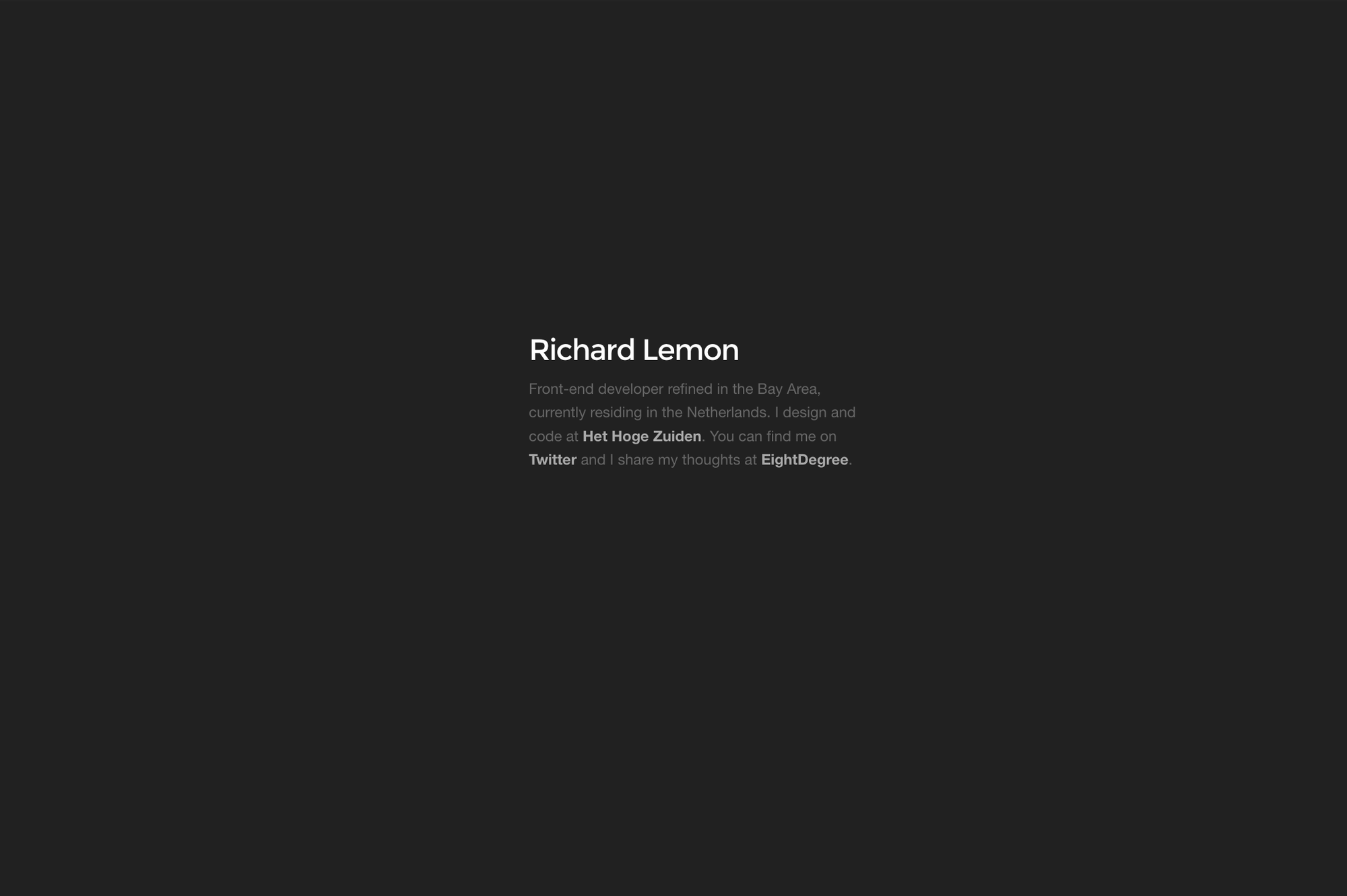
I moved to Maastricht in 2014. Shortly after, the site became this:
"Front-end developer refined in the Bay Area, currently residing in the Netherlands. I design and code at Het Hoge Zuiden. You can find me on Twitter and I share my thoughts at EightDegree."
That's it. No logo. No portfolio. No nav. No services. Just a name, three sentences, and two links -- centered on a black screen with nothing else around them.
I don't remember consciously deciding to do this. But looking at it now I understand it completely. I had just returned from eleven years abroad. Rotterdam behind me, Maastricht ahead. Het Hoge Zuiden was my freelance vehicle. I was recalibrating.
The site reflected exactly that. Stripped to the minimum. As if saying: I'm here. I'm working. I'll have more to say when I know more myself.
What this era taught me: Sometimes the most honest thing you can put on your homepage is almost nothing. Restraint is a form of communication.
2015 – Interaction Designer, Engineered in the Netherlands
In February 2015 I joined Ideebv. The site quietly shifted again.
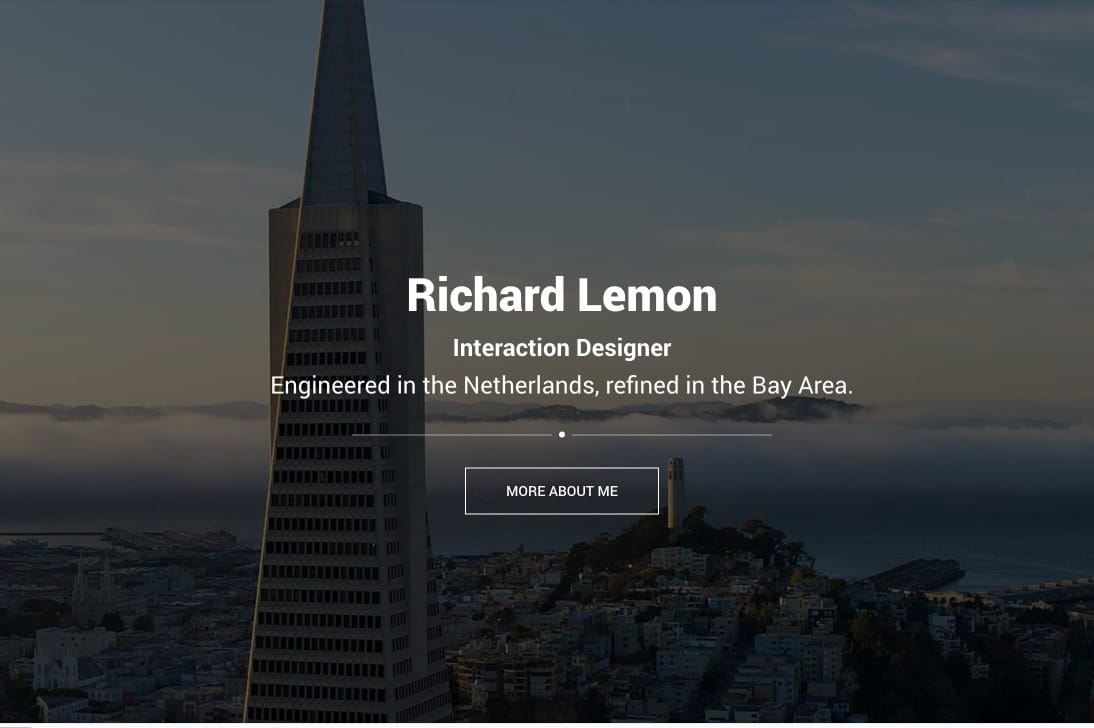
A full-screen hero. The Transamerica Pyramid in San Francisco at dusk, fog rolling over the hills. The headline: "Richard Lemon -- Interaction Designer." And below it, a line I'm still proud of: "Engineered in the Netherlands, refined in the Bay Area."
That sentence does a lot of work. It positions the Bay Area chapter not as an origin but as a finishing school -- the Netherlands as foundation, California as craft. Which is more or less true.
This version of the site was confident in a different way than 2012. Less hustle, more positioning. Less "call me", more "this is who I am." The shift from freelancer to senior professional was visible in every design decision.
What this era taught me: Your headline is a positioning statement. Write it like one.
2016 – Ghost Appears for the First Time
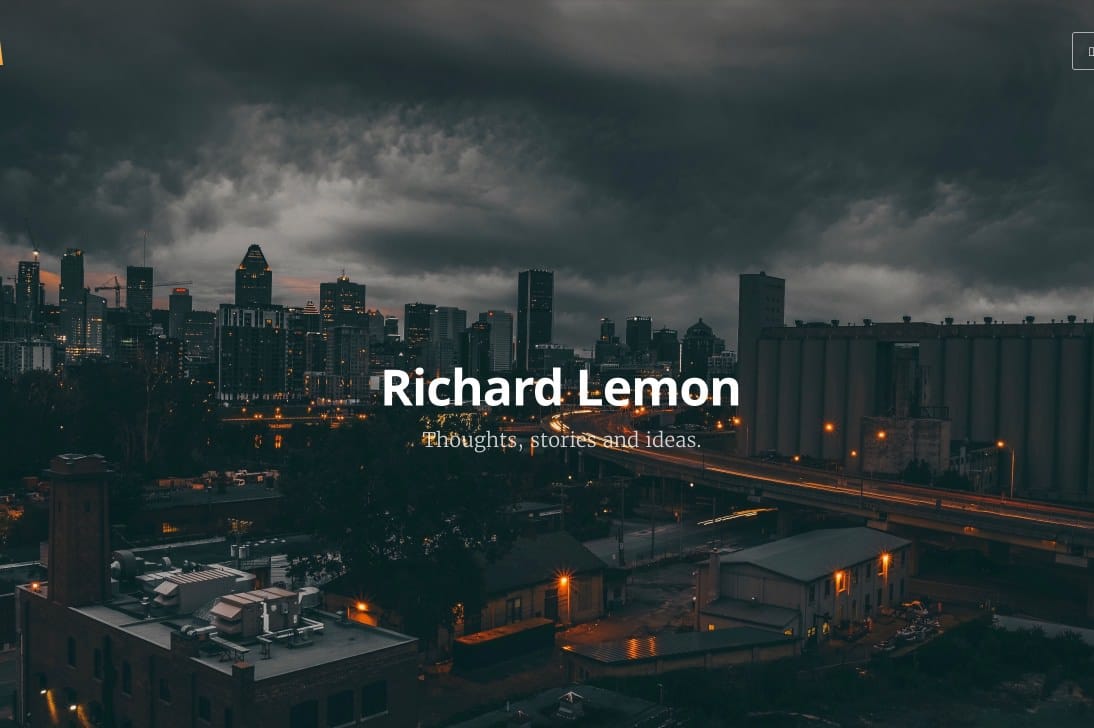
October 2016. A dark cityscape hero -- moody, cinematic. The tagline: "Thoughts, stories and ideas."
This was the first time richardlemon.com ran on Ghost CMS. And it was the first time the site wasn't primarily a portfolio or a services page – it was a blog again. Writing was back. Posts about upgrading Ghost on DigitalOcean. About the Microsoft Surface Studio. About new beginnings.
That "new beginnings" post from October 14, 2016 opened with: "New season, new set of goals. I'm not waiting for a new year to start."
Nine years later I'm still writing that post, in different forms, with different tools. The instinct was always there.
Also notable: this was when Ghost and DigitalOcean first became part of the stack. The same combination I'm running right now in 2026, a decade later.
What this era taught me: The tools you commit to early have a way of sticking around. Choose them like they might become part of your identity -- because they might.
2018 – The Logo and the Silence
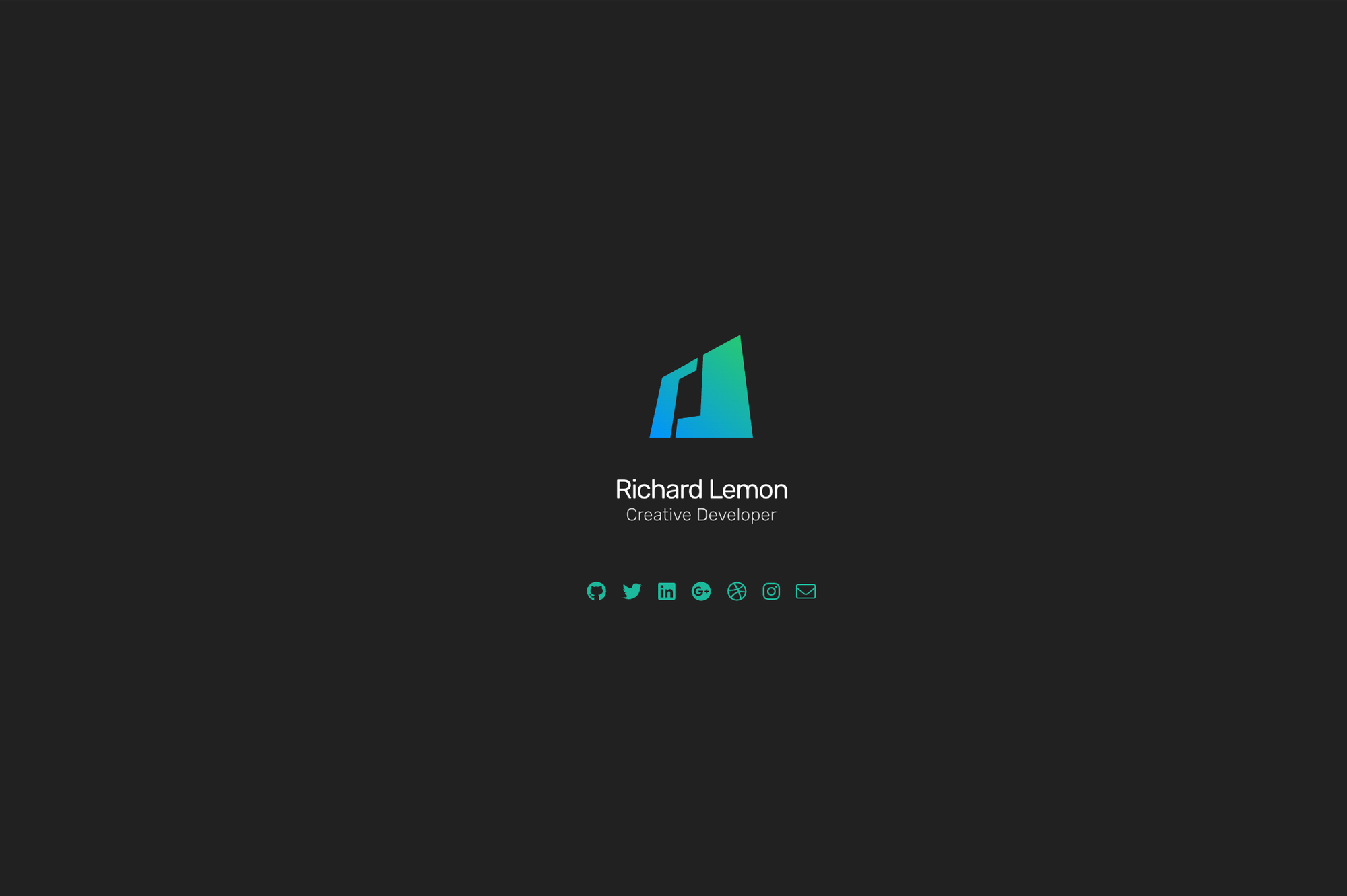
August 2018. Dead center on a black screen: a geometric teal-green gradient logo, a clean R-shape. Below it: "Richard Lemon. Creative Developer." Seven social icons. Nothing else.
No copy. No portfolio. No services. No blog. Just a mark and a title.
This is the most designer thing I have ever done with this domain. It says: I don't need to explain myself. If you know, you know. If you don't, that's fine.
I was four years into Ideebv by then. Doing real work for real clients -- VodafoneZiggo, Universiteit Maastricht. The freelance storefront was irrelevant. The site became a flag, not a funnel.
What this era taught me: There's a version of confidence that looks like minimalism. It's not laziness. It's knowing your audience already knows you -- and everyone else isn't who you're talking to.
2026 – The Platform Era
And then something changed again.
In late 2024 I started writing seriously. Not documentation, not client work -- actual articles. About AI workflows. About CSS techniques I wish I'd known earlier. About kettlebell training and HRV and what it means to be a 56-year-old developer in an industry that moves fast and forgets faster.
richardlemon.com became a content platform. Ghost CMS, self-hosted on DigitalOcean -- the same stack from 2016, finally taken seriously. A content calendar. A newsletter. A pillar structure. And GEO -- Generative Engine Optimization -- the practice of making your site legible not just to humans and Google crawlers, but to the AI systems that increasingly shape what people discover online.
Which brings me back to that 2008 blog post about the Semantic Web. About machines understanding content. About a new kind of artificial intelligence that could surface connections humans would never find.
That's what I'm building for now. In 2008, I was writing about it as a trend. In 2026, it's the strategy.
The toolstack in 2026:
- Ghost CMS on DigitalOcean (since 2016, finally committed)
- Make.com for content automation
- Cursor + Claude for writing and development
- Google Search Console for visibility auditing
- llms.txt and llms-full.txt for AI discoverability
From Biker Dating Sites link partnerships to llms.txt. That's the arc.
What this era is teaching me: The things you were right about in 2008 are still worth building. You just have better tools now.
What 7,171 Days Actually Means
The Wayback Machine has 109 captures of this domain. Each one is a version of me that made complete sense at the time and looks slightly insane in hindsight. The Santa Rosa freelancer with the fax number. The Rotterdam hustler with the speech bubble. The silent returner with three sentences. The minimalist with just a logo. The writer who came back.
None of them are wrong. All of them are the same person.
What I didn't understand in 2006 -- but Google apparently did, from day one -- is that a domain is more than a URL. It's compounded trust. Every year this domain existed, pointed to something real and maintained, it was building authority that genuinely cannot be faked or fast-tracked. A domain registered in 2006 starts every conversation with a credibility that a domain registered last year simply doesn't have yet.
If you're reading this and you're thinking about letting your domain lapse because you're pivoting, rebranding, or just tired of the old version of yourself -- don't. Change the headline. Strip it back to three sentences if you need to. Let it sit on a black screen with just your name for a year.
But keep the domain.
The Wayback Machine is watching. And sometimes, 7,171 days later, it has exactly the story you didn't know you needed to tell.
richardlemon.com was registered on September 5, 2006. If you've had your domain for years and want to talk about what that's actually worth -- I'm around.
Subscribe to my newsletter to get the latest updates and news



Member discussion